
A decade ago, the biggest journalism network ever assembled set out to investigate a system built to stay hidden.
What they uncovered became the Panama Papers, a sweeping investigation that broke open the secretive world of finance and exposed how the rich and powerful use offshore structures to protect wealth and dodge scrutiny.
This is part two in a three-part series that explores how it all came together, drawing on the recollections of the journalists whose reporting sparked a global reckoning over financial secrecy and its consequences. Read part one here .
The rabbit hole
Anuška Delić (Slovenia)
Then: Investigative reporter, Delo | Now: Founder and editor-in-chief, Oštro
At her desk in Delo’s open newsroom, Anuska Delić kept her back to the window and her work to herself.
An old-school reporter, she routinely printed documents and read them with a pen in hand and Post-its close by. But the Panama Papers weren’t something you printed — not if you were trying to keep to the secrecy rules that held together a massive journalistic collaboration.
When Delić opened the database for the first time, she did what every reporter on the project did. She searched home.
“Slovenia.”
The database returned about 4,000 hits – manageable, compared to the thousands that swamped reporters from bigger countries. She realized quickly that she could probably examine every reference.
What she didn’t know yet was that she was pregnant.
She had been invited to join the project in early summer 2015. Two weeks later, she learned she was expecting a child. Her son would be born the following March, two weeks before publication.
“It was a crazy time,” remembers Delić, who now leads Oštro, an Adriatic investigative journalism center she founded after leaving Delo.
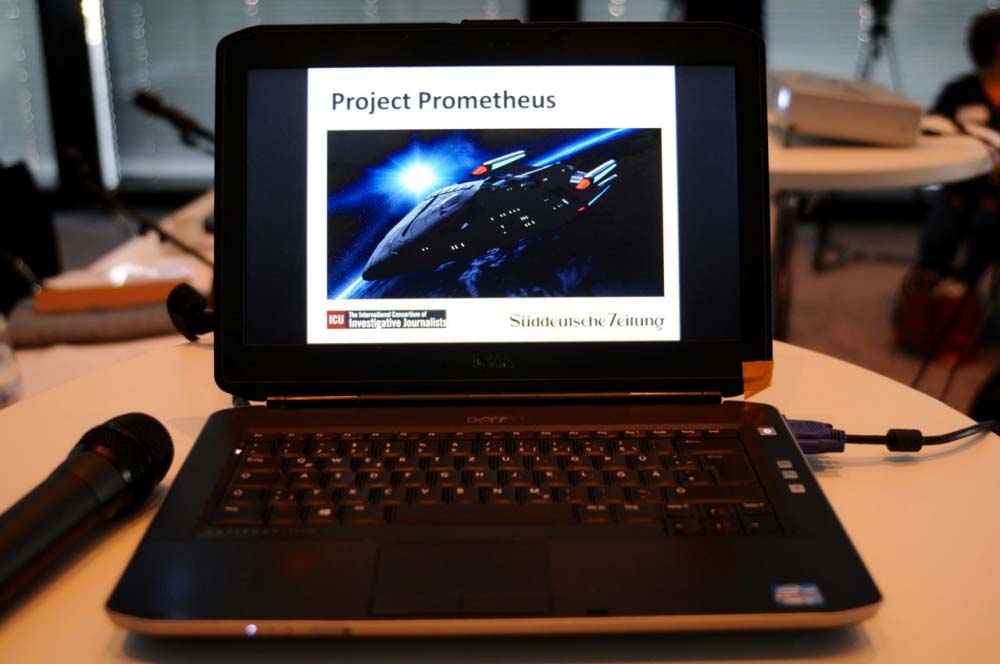
Before it was called the Panama Papers, the investigation was known by a codename — Project Prometheus. Image: Kristof Clerix
On one side of her life was the biggest investigation she would ever work on. On the other, the realities of pregnancy — exhaustion, medical checkups and the constant awareness that a new life was growing.
At first, the database research felt exhilarating.
“It was like Alice in Wonderland — going down the rabbit hole,” she said.
The files were messy. Attachments sometimes mattered and sometimes didn’t. In the beginning, she opened everything, trying to understand how the system worked.
“Almost everything I saw was like, ‘Oh! What is this? What could this be?” she said.
Then one day, the project took a turn into new, unexpected territory.
A name jumped out: Dejan Zavec. The renowned boxer – also known as Jan Zaveck and Mister Simpatikus — had grown up poor and become one of Slovenia’s most admired athletes. And now Delić saw he had established an offshore offshore company in Anguilla.
These weren’t just distant oligarchs or anonymous businessmen.
“Of all people, I had to find the darling of the public,” Delić said. “That was the end of the honeymoon phase for me.”
She began the slow work of figuring out what Zavec’s company did and why it existed.
“Just finding someone in the documents isn’t enough,” Delić said. “Just because people would be interested doesn’t make it public interest.”
She learned that Zavec had established a company, ABC Agency, in Anguilla. The company took over his Slovenian firm, Boksing, which held the real estate for his gym, allowing assets to be moved through a tax haven before ultimately being transferred to another company he controlled.
Zavec initially denied owning ABC but later he acknowledged that he had founded it and had not reported it to tax authorities.
Just because people would be interested doesn’t make it public interest.
By then, the scale of the project had become clear. Hundreds of reporters around the world were digging through the same trove of records, chasing threads across borders, time zones and languages.
At night, the baby had a habit of hiccuping in utero — not briefly, but for stretches that could last more than an hour, keeping Delić awake at odd hours.
Sleep was impossible.
“So you know what I did?” she said.
“I looked through Panama Papers.”
The loneliest man
Johannes Kr. Kristjansson (Iceland)
Founder and editor-in-chief, Reykjavik Media
In Iceland, a country small enough that it can seem like everyone knows everyone, keeping a secret can be harder than uncovering one. Johannes Kr. Kristjansson knew that this would be one of the toughest challenges of his career the moment he learned his prime minister’s name in the Panama Papers.
ICIJ’s team found Sigmundur Davíð Gunnlaugsson in the data early on — but just finding the name of a country’s leader wasn’t enough. ICIJ needed a journalist who knew Iceland’s politics and culture to help unravel the full story.
ICIJ’s leaders had never heard of Kristjansson, but among Nordic journalists, he had a reputation as one of the best. Swedish partners recommended him to ICIJ. They knew Kristjansson as a television reporter for RÚV, Iceland’s national public broadcaster, and knew he’d written about financial structures and political accountability before.
Kristjansson dug in right away.
“He meticulously went through thousands of bankruptcy records in Iceland, through the records of Parliament and through corporate records,” said ICIJ Director Gerard Ryle. “Johannes had the local knowledge to know where to look, and the individual skill and determination to look thoroughly.”
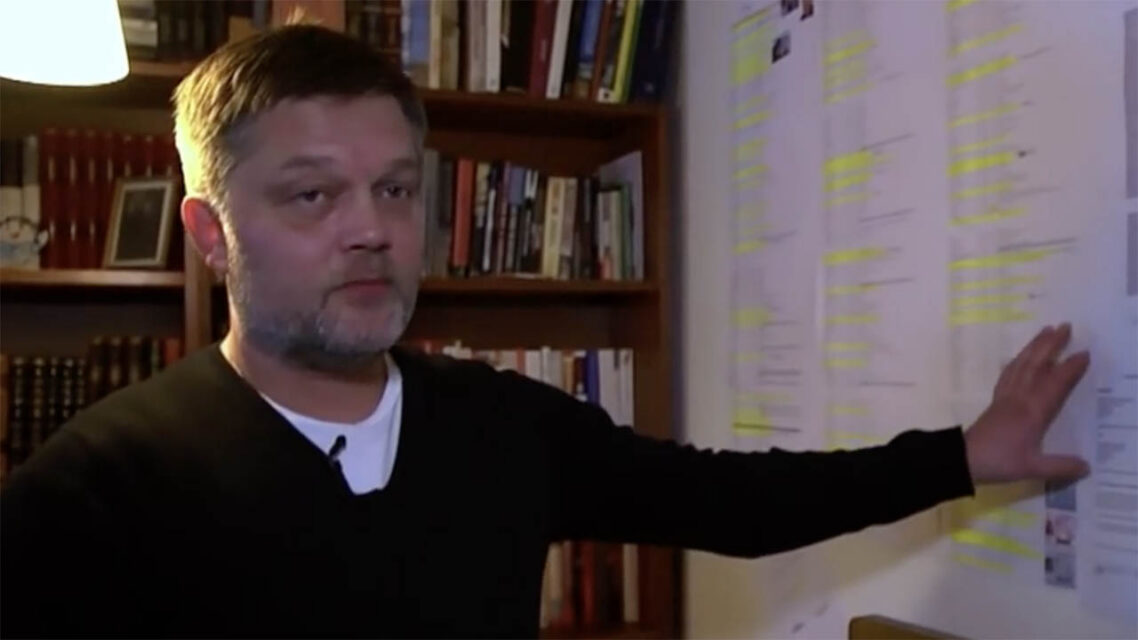
Johannes Kristjansson worked in near total isolation in Iceland, keeping his Panama Papers story secret until it was time to publish. Image: via NDR
The records he found put context around the Panama Papers discovery: Gunnlaugsson had co-owned a British Virgin Islands company called Wintris Inc. The ownership had not been disclosed in his financial statements when he became a member of Parliament in 2009. Later that year, he sold his 50% stake in Wintris to his wife, Anna Sigurlaug Pálsdóttir, for one dollar.
Offshore companies had played a significant role in Iceland’s 2008 banking collapse, which devastated the economy and triggered criminal investigations. Gunnlaugsson had campaigned for office in the shadow of that crisis.
And now there were documents showing that his household was secretly connected to an offshore company linked to the same financial system that had shaken the country.
This was a big story, and Kristjansson knew he’d need time to tell it — and space to keep it under wraps. He quit RÚV to focus on it entirely.
“That kind of sacrifice just tells you something about the quality of the people that were part of this work and how far they were willing to go for the sake of the story,” said Marina Walker Guevara, then ICIJ’s deputy director.
For Kristjansson, that sacrifice looked like isolation.
He covered the windows of his home with thick black plastic to keep out prying eyes. He worked long nights through the Icelandic winter, sitting alone with information that would ultimately bring down the leader of his country.
Ryle later called him “the loneliest man in the world.”
But his loneliness did not mean total seclusion. As the investigation unfolded, Kristjansson turned to ICIJ’s virtual newsroom for support, and for solace. He messaged colleagues around the world, strategising the storytelling with his Nordic counterparts, and adopting a wry, gallows humor to help cope with the solitude.
“Wintris is coming,” he wrote.
Going inside
Frederik Obermaier (Germany)
Then: Investigative reporter, Süddeutsche Zeitung | Now: Co-founder and director, Paper Trail Media
Frederik Obermaier’s head was full of email threads and office memos from Mossack Fonseca. The files had sketched an intimate portrait of the Panamanian law firm — staff lists, inside jokes, working hours, even who played sports after work.
Now it was time to see the place in person.
Aged 31 at the time, Obermaier was a junior reporter by German newsroom standards, a few years younger than Süddeutsche Zeitung’s other lead reporter on the story, Bastian Obermayer (no relation). But Obermaier was the one who spoke Spanish, so off he went to Panama.
Back in Germany, Obermayer wondered if his reporting partner would be detained or if the sources he’d traveled to see would get spooked and decline interviews he’d traveled 6,000 miles for. Obermaier admits only now that he was scared, too.
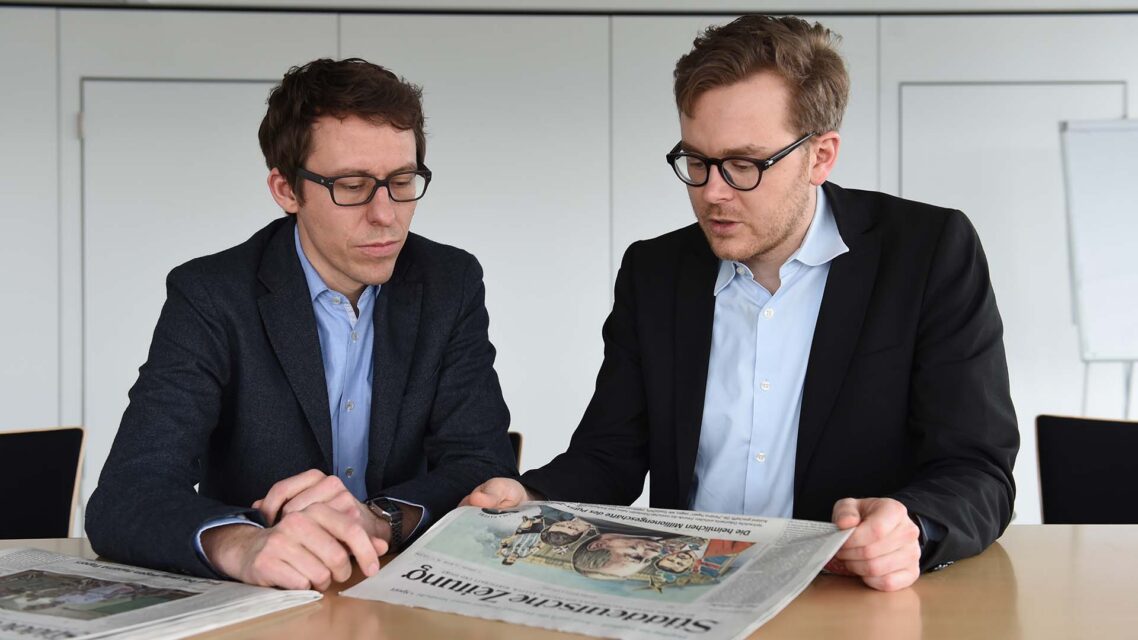
Bastian Obermayer, left, and Frederik Obermaier, right, at Süddeutsche Zeitung’s Munich offices in April 2016. Image: Christof Stache/AFP via Getty Images
On arrival, ICIJ’s Panamanian partners helped him navigate the Central American country. Rita Vásquez from La Prensa insisted Obermaier use a driver. It wasn’t until later that he learned the “driver” was also a quiet bodyguard. Had he known that up front, Obermaier now says, he might have been even more nervous.
Two interviews would define the trip — one in an upscale office with an attorney who bragged about his private chef and proudly paraded his press clippings. The other with a woman who lived in a poor village on the outskirts of Panama City.
Ramsés Owens’ law office was a short walk from his old employer, Mossack Fonseca. Obermaier knew him to be one of the chief architects of the firm’s secrecy empire — a lawyer who helped build the firm’s “nominee beneficial owner” system that allowed its clients to hide their identity behind layers of paperwork.
Owens seemed to mistake Obermaier for a naïve foreign reporter in need of a primer on the offshore world. Owens was glad to offer his expertise on camera, describing Mossack Fonseca as a model of prestige and integrity.
When Obermaier shifted the conversation to beneficial owners, Owens boldly claimed that the practice amounts to money laundering.
“He was telling me directly to my face that such a behavior would be completely illegal,” Obermaier recalled. “And for me, I’m not a good actor, so it was really hard to not say ‘I know that it is you who has done exactly that.’”
The moment landed like a jolt: the system calling itself illegal.
The second encounter was miles away in every sense.
Obermaier had seen the name Leticia Montoya more times than he could count. She was named as a director of thousands of companies that surfaced in the leaked documents.
Following the paper trail led Obermaier to a tiny house in an impoverished neighborhood with rubbish burning in the streets.
Montoya wasn’t home when he visited, but he briefly spoke to her later by phone.
No, she didn’t know what the companies did or who owned them. She told Obermaier to direct his queries to the registered agent — Mossack Fonseca. Then she hung up.
In Panama, the paper trail suddenly felt unmistakably human.

Mossack Fonseca’s Panama City headquarters, to the right. Image: Joe Raedle/Getty Images
Messages in the night
Ritu Sarin (India)
Executive editor (news and investigations), The Indian Express
It was late and Ritu Sarin had finally gone to bed.
After eight months of logging documents and scanning files alongside two colleagues, the Indian Express’s senior editor was tired.
“There was no Saturday and Sunday,” she recalled. “Morning to night in the office for Panama Papers for months.”
Moments in between were filled with text message exchanges with P. Vaidyanathan Iyer and Jay Mazoomdaar, teammates pursuing their own leads in the data.
That night, just a few days before the agreed-to publication date, the work followed her home, as it often did. She remembered something she’d seen earlier that day on I-Hub, the digital newsroom ICIJ created so journalists could share information securely.
“Things were rolling very fast and the momentum had built up,” Sarin said.
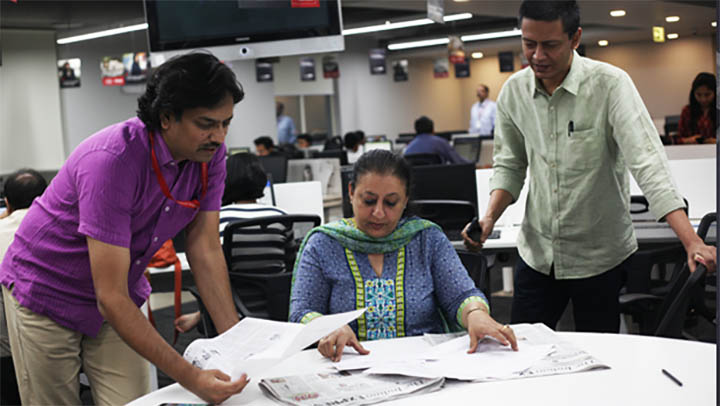
Indian Express investigative reporters P Vaidyanathan Iyer, Ritu Sarin, Jay Mazoomdaar at work in India. Image: Indian Express
With 370 collaborators across multiple time zones and publication day approaching, messages had been streaming in faster than journalists could read them, 24 hours a day. Sarin tried to keep up, but it was impossible.
Hours earlier, Umar Cheema, an ICIJ member a thousand miles away in Pakistan, had flagged the name Aishwarya Rai.
“I had gone to sleep,” Sarin said. “And suddenly it struck me — hey, there was a message about an Indian actress.”
Indian Express editors already had more stories planned than they could reasonably launch on Day One of the project — and even those would be squeezed if India’s cricket team made it to the T20 World Cup final. Win or lose, in a country where cricket is king, the match would dominate the front page.
A single document was like a treasure trove where there were attachments inside attachments.
Sarin immediately went back to I-Hub, opened the dataset and began following the trail.
An old-school reporter who prefers paper, Sarin started printing. The stacks on her bookshelf grew, spilling out of plastic folders she struggled to keep organized. Documents had a way of multiplying.
“A single document was like a treasure trove where there were attachments inside attachments,” she said.
As the pages piled up, Sarin started connecting the dots. The records pointed to Rai’s role as a director of Amic Partners, an offshore company Mossack Fonseca created in the British Virgin Islands.
(Rai’s media adviser at the time called the information “totally untrue and false,” but Indian authorities would later open a civil investigation into her financial affairs.)
The calendar was unforgiving. Publication was days away and Sarin’s team was still gathering comments from other figures named in their reporting — Pakistani Prime Minister Nawaz Sharif and some of India’s most powerful business leaders.
“Here was another very important story,” Sarin said. “It was very evident it’s going to make it to page one on Day One, and it did.”
GIVE TO HELP US INVESTIGATE!
Help us fight corruption, injustice and inequality with just $25/month.
Dear Mr. Putin
Gerard Ryle (United States/Australia)
Executive director, ICIJ
For months, the Panama Papers had lived inside a secure database — searchable, sortable, silent. As publication neared, it was becoming increasingly evident that the files’ secrets would likely rock the world’s financial system — and could potentially even destabilize governments.
It was time to approach the figures named.
In Western newsrooms, that step is routine. Before publishing, reporters lay out their findings and give subjects of investigations a chance to respond.
The draft letter to the Kremlin, addressed “Dear Mr. Putin,” ran several pages. It detailed offshore companies and financial links to the Russian president’s inner circle.
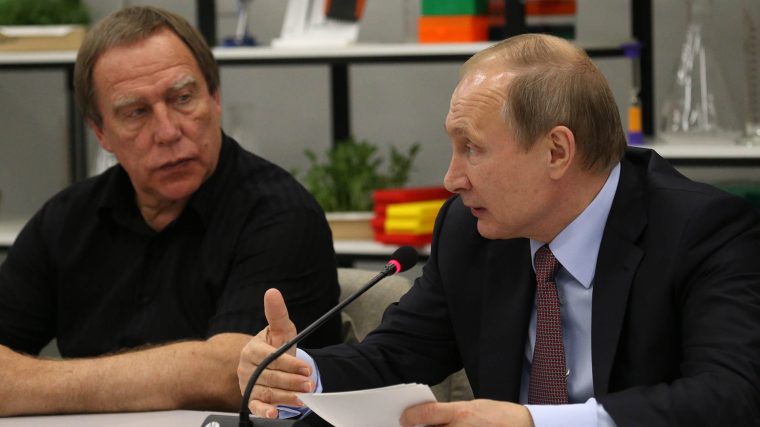
Russian President Vladimir Putin, right, and his friend and cellist Sergei Roldugin at a meeting in 2016. Roldugin was one of a number of members of Putin’s inner circle named in the Panama Papers. Image: Mikhail Svetlov/Getty Images
In Washington or London, those kinds of letters were standard. Not in Moscow.
Russia was a place where journalists who crossed powerful interests could lose more than access. Partners there were worried. For safety, they wanted to be out of the country when Putin saw the letter and when publication day came, and they needed time to make arrangements.
Normally, ICIJ allows several weeks for responses but with grave security concerns , the usual timeline got compressed. Putin’s letter was sent just a week before publication.
The response was swift – and unexpectedly public.
The Kremlin called a press conference, accusing ICIJ of preparing an “information attack” aimed at disrupting upcoming elections.
This was the first time the upcoming investigation had been mentioned publicly. The secrecy that held together 376 journalists had been pierced.
“That sent panic through everybody,” Ryle said.
But as the day unfolded, something else became clear.
The Kremlin meant it as a preemptive strike: discredit the messenger before the news landed. Instead, the very act meant to discredit the project signaled that it mattered. And now the world was waiting for it.
“It really began to build interest in what we were about to do,” Ryle said.
The Kremlin had tried to cast the project as a targeted political assault. Instead, it confirmed that the story was big enough to rattle power.
But the Panama Papers was never just a Russian story, and Putin wasn’t the only world leader about to face global scrutiny.
This is part two of a three-part series; read part one here . Check back next week for the final installment, and subscribe to ICIJ’s newsletter to receive news updates direct to your inbox.