
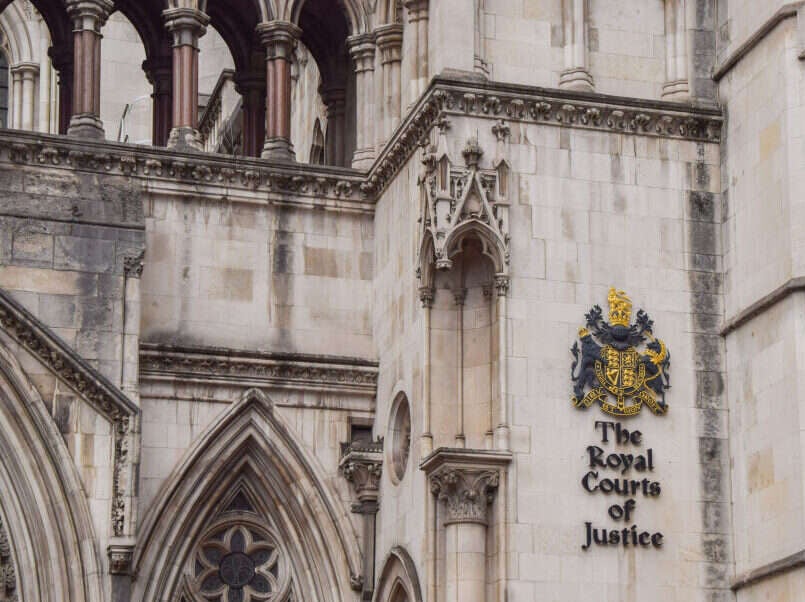
Royal Courts of Justice. Picture: Vuk Valcic/SOPA Images/LightRocket via Getty Images
The UK has developed a quiet reputation for facilitating reputation washing on an industrial scale. A study by the Foreign Policy Centre published in 2024 r eported the UK has “become a second home to thousands of kleptocrats, political exiles, businesspeople and other players whose wealth has been built on corruption or unsure means”.
The report examined the uncomfortable role public relations agencies played in facilitating this. Some will knowingly accept dubious briefs. But a far greater number contribute unwittingly, simply by failing to interrogate the work in front of them.
Reputation washing rarely relies on a single tactic. It operates within a broader ecosystem in which strategic communications, legal pressure, and weak safeguards reinforce one another. Respectability is manufactured through process rather than truth. Over time, this becomes normalised, not because it is ethical, but because it is effective.
This matters because reputation washing doesn’t operate in isolation. It functions within a broader apparatus designed to control the narrative by suppressing scrutiny rather than inviting it.
One tactic used is the threat of launching libel or data protection claims against journalists to curtail public interest reporting, commonly referred to as Strategic Lawsuits Against Public Participation (SLAPPs). This is defined by the UK Government as “an abuse of the legal process, where the primary objective is to harass, intimidate and financially and psychologically exhaust one’s opponent via improper means”. It is a tactic that represents perhaps the most corrosive and pernicious mechanism in that apparatus.
At their core, SLAPPs involve the weaponisation of the legal process. Their purpose is not to secure justice, but to intimidate, drain resources, and exhaust those who seek to investigate and disclose matters of public interest, with the threat of ruinous legal costs doing much of the work. When a well-resourced claimant targets a defendant of modest means, the outcome is often decided long before any hearing. Journalists abandon stories, researchers shelve findings, whistleblowers remain silent.
The damage extends far beyond individual cases. Every story killed before publication, every investigation quietly dropped, represents information the public deserved to know. This has a chilling effect on democratic accountability in ways we can measure only by guessing at what we never learn.
At its worst, PR becomes complicit in this suppression. Practitioners help construct the scaffolding of silence, burnishing reputations in public while legal threats do the work in private. However, the purpose of our profession is and must be precisely the opposite, to open channels of communication, not seal them shut. When done ethically, PR builds mutual understanding between organisations and the communities they serve. It facilitates transparency. It helps organisations explain what they do and submit to fair scrutiny from stakeholders concerning how they do it.
Parliament has recognised the problem, at least rhetorically. The Economic Crime and Corporate Transparency Act (ECCTA) introduced limited anti-SLAPP provisions, creating mechanisms to strike out abusive claims early and protect defendants from punitive costs but only where the underlying speech relates to economic crime.
A wider SLAPPs Bill has been brought forward twice as a Private Members’ Bill. First by Wayne David MP in December 2023, before falling when Parliament was dissolved ahead of the 2024 general election, and again by Gregory Stafford MP in January 2025.
Both Bills sought to go beyond the ECCTA’s narrow scope by allowing courts to dismiss claims where a claimant’s conduct appears designed to cause harm or inconvenience beyond legitimate litigation. Yet progress has since stalled. Government has talked a good game, but talk is all we have for now and the profession cannot afford to wait for Westminster to catch up.
At the CIPR, we hold members to exacting ethical standards. Our Code of Conduct demands honesty, fairness, and accountability. Practitioners who fall short face consequences. But professional standards only function if they’re actively upheld, if individuals take ownership of the choices they make.
SLAPPs represent one of the gravest threats to press freedom and public accountability in Britain today. The PR profession should stand with journalists in opposing them, not enable the machinery that makes them effective.
If we want to retain the public’s trust in the value PR has to offer, we must demonstrate that we’re on the side of openness. Not silence.
Email [email protected] to point out mistakes, provide story tips or send in a letter for publication on our “Letters Page” blog