
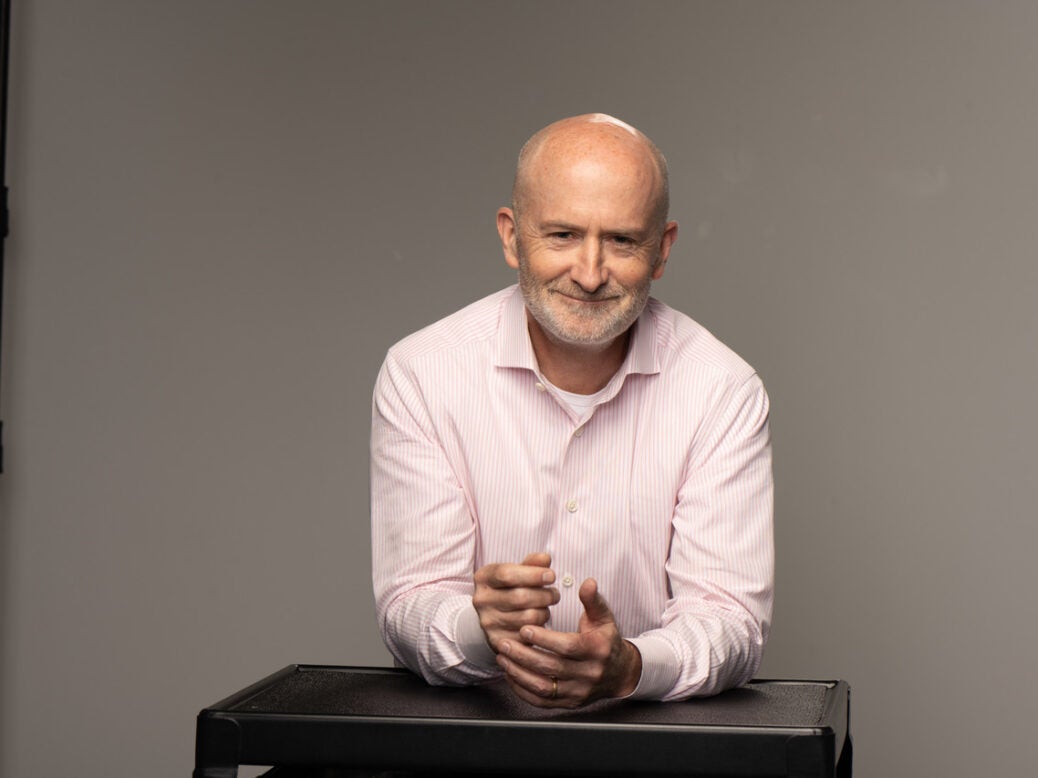
Mill Media Investigations Editor Cameron Barr. Image: Marvin Joseph / The Washington Post
Mill Media investigations editor Cameron Barr says the start-up news group, which publishes subscriber-funded local journalism in cities across England and Scotland, is a “marvel” and he finds “motivation” in working with his “determined” colleagues.
The former Washington Post managing editor also tells about his disappointment in not getting the job of executive editor at the title after the departure of Marty Baron, but how it landed him in a new country with a new project.
Barr also shares his frustration at the difficulty in holding individuals to account and that his proudest achievement was doing exactly that after the death of a reporter in East Timor.
What was your breakthrough moment?
My 19-year run at The Washington Post culminated in my failure to succeed the mighty Marty Baron as executive editor. When he stepped down in 2021 I had been Marty’s managing editor for news and features for five years, absorbing a thing or two about the defence of democracy, the twin pillars of accuracy and fairness, and the need to answer emails immediately. I was one of four finalists, but the publisher and the owner chose someone else.
This disappointment demanded a swerve, and in 2023 my wife and I decided to forsake America for England and the city for the country. Now we are renovating a historic farmhouse on the edge of the Lake District. I oversee investigative reporting at Mill Media, a six-year-old startup that is reviving quality local journalism in cities across England and Scotland. I am writing prose and poetry about my life and career. I don’t need to answer emails or texts immediately, although I am still pretty fast.
What’s currently keeping you up at night?
British journalism – and perhaps the culture writ large – resists personal accountability. Councils and companies are willing to take collective responsibility for mistakes and malfeasance, but the heads of culpable individuals too often stay below the parapet. I am not the only one frustrated by this reticence.
This year I edited an impressive feat of investigative reporting by Andrew Kersley of The Londoner. His story exposed the lapses in social care that led to the death of a disabled adult who lived with her very troubled mother . The coroner in the case seethed at Waltham Forest council’s unwillingness to name those responsible for the failings. “Unless and until somebody actually feels the flames at their feet about the consequences of their actions or inactions,” said Graeme Irvine, senior coroner for the East London Coroner’s Court, “not a great deal changes.”
I agree. One of journalism’s jobs is to name the names.
What gets you out of bed in the morning?
I find motivation in collaborating with my ambitious and determined Mill Media colleagues, and in the arduous work involved in trying to put my experiences into words. As I’ve often said to reporters, that’s why it’s called writing.
How are things going right now, what’s working?
I remember hearing about Joshi Herrmann, the founder and editor of Mill Media, when Tina Brown touted his accomplishments at the first Sir Harry Evans Investigative Journalism Summit. Mill Media is indeed a marvel – subscriber-funded newsletters that showcase compelling writing and rigorous reporting. Joshi and his team are finding success with a business model based on great storytelling and strengthening community.
What has been your proudest achievement?
In September 1999, a Dutch reporter named Sander Thoenes was killed in East Timor. He freelanced for The Christian Science Monitor, my employer at the time, and the Financial Times. In early 2000, I investigated the actions of an Indonesian military unit as it departed East Timor, publishing evidence that Battalion 745 had killed Sander and 20 other civilians.
Several years later, a friend of Sander’s told me that my series on the battalion’s murderous exit from East Timor is the closest thing to accountability his loved ones have ever received.
Biggest mistake, and what did you learn from it?
I regret working so much. In the late noughties and early 2010s, after I moved from reporting to editing at The Post, my first marriage disintegrated and I became a half-time single parent to my two children, Leo and Lyle, who are now in their 20s. I missed years of dinners with those wonderful people when they were young, among other absences, because I was in the newsroom. What did I learn? With apologies to Beckett: Love again. Love better.
When it comes to leading a team, what works for you?
I help teach a two-day training workshop at the Reuters Institute for the Study of Journalism called Leading Newsroom Change. My session is about cultivating a sense of mission in leading newsrooms. In an era when newsroom leaders are compelled to talk about audience, engagement and AI, journalists want to be reminded that their work matters, that it has consequence in the world, that it can create positive change. I try to convince editors and producers that invoking mission clearly and repeatedly supports recruitment and retention, promotes dedication, elevates ambition.
If you could give your younger self one piece of advice, what is it?
Read the story aloud – slowly, and with no interruptions – before you file it.
Who or what inspires you and why?
In the early 2010s, in addition to the ending of my marriage, I faced the deaths of my parents, who died within a year of each other. My day-to-day solace came from Albert Camus’ retelling of the myth of Sisyphus. Camus concludes his famous essay by describing the hero who defied the gods again putting his shoulder to the stone. And then: “The struggle itself toward the heights is enough to fill a man’s heart. One must imagine Sisyphus happy.”
What is your work mantra?
The struggle continues.
Topics in this article : Mill Media
Email [email protected] to point out mistakes, provide story tips or send in a letter for publication on our “Letters Page” blog