
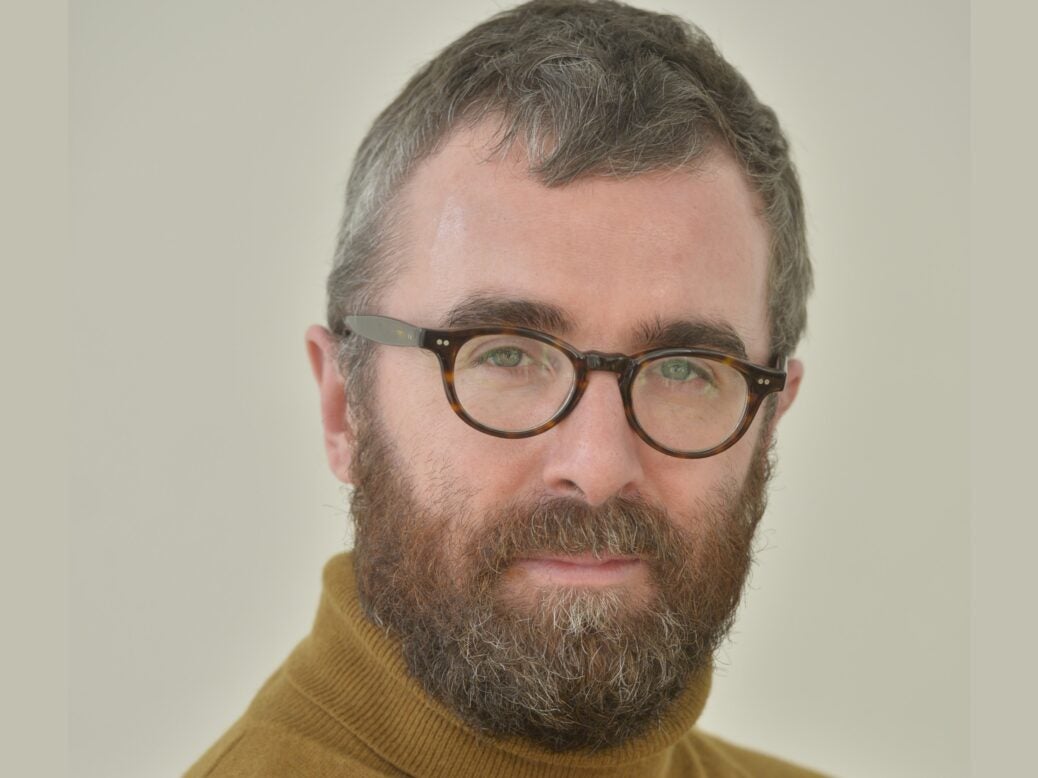
Peter Geoghegan, editor and founder of Democracy for Sale
The founder of investigative journalism outlet Democracy for Sale has said the fragmentation of established media is the “biggest worry” and “biggest opportunity” for new outlets.
Geoghegan added the increasing limits of the media also creates an appetite for new perspectives and ways of telling stories.
Geoghegan co-founded independent, investigative journalism co-operative The Ferret in Scotland, before graduating from Channel 4’s investigative journalism Dispatches scheme in 2016. In 2018, he began working with international news website Open Democracy before founding Democracy for Sale in 2023.
Democracy for Sale won Newsletter of the Year (Specialist/Regional) at Press Gazette’s Future of Media Awards in 2026 , and the Specialist Journalism prize at British Journalism Awards 2025 .
What’s been a big turning point/breakthrough moment for you?
Growing up in a small town called Longford in the midlands of Ireland I always dreamed of being a journalist, but I had no idea how to get into the industry, so I ended up doing a PhD in Human Geography at The University of Edinburgh.
While I was finishing my doctorate I had a short-term job working as a researcher in Belfast while also doing a lot of freelance writing, including for an arts journalism website in Belfast where I eventually became a journalist.
A few years later, I was working as a journalist in Scotland. I really wanted to get into investigations, and I had co-founded the Scottish investigative co-operative The Ferret. In 2015, I won a place on Channel 4’s Dispatches training scheme. Hundreds of people had applied and only six of us were chosen. The experience was amazing and without it I don’t think there’s any way I’d be where I am now.
In June 2016, I saw a copy of the Metro with a big “vote leave” advert. I turned it over and there was an imprint saying that the ad had been paid for by the Democratic Unionist Party. That little nugget was the germ of my first big investigation into dark money – I found that the DUP had received almost half a million pounds in undeclared funding for its Brexit campaign. It was my first story for openDemocracy. I eventually became openDemocracy’s first investigations editor, then its editor-in-chief; I wrote a best-selling book Democracy for Sale: Dark Money and Dirty Politics; and I founded Democracy for Sale.
What’s currently keeping you up at night?
Without getting into that clichéd line about the Chinese having the same word for crisis and opportunity, I think my biggest worry is also the biggest opportunity: we are living in an era of huge media fracture. The paradigm has changed completely. The days of everyone getting their news from a handful of sources are over.
What comes next isn’t clear but there is a real challenge to creating trust in a society when the fundamental basis of trust, a shared set of facts, is being so eroded. That really is a worry. But at the same time, the fracturing of established media – which also reflects the limits of that media and the appetite for new perspectives and ways of telling stories – is also a huge opportunity for a new outlet like Democracy for Sale.
What gets you out of bed in the morning?
The next story gets me out of bed. I absolutely love what I do. I’m in such a privileged position to investigate stories I care about – dark money and hidden influence in British politics – without fear or favour. I also really enjoy collaborating with others both inside Democracy for Sale and outside it.
How are things going right now, what’s working?
A lot I guess. More than 61,000 people get our newsletter. Almost 2,500 of those pay. In the past year we have won a British Journalism Award , the Paul Foot Award and a Future of the Media Award. It’s not just about awards, our stories have led to real change in the world too, whether that’s official inquiries or changes in rules and regulations, and are followed up by major media outlets so often that it’s hard to keep track.
I think audiences are hungry for the kind of in-depth investigations that we do, but also the sense-making pieces, whether that’s me doing interviews with the likes of Patrick Radden Keefe and Alan Rusbridger or experts like Robert Barrington writing opinion pieces about corruption in British public life.
What has been your proudest achievement?
I think I’d have to say the Paul Foot award, which I won with Khadija Sharife for our investigation into Labour Together paying a PR firm to investigate journalists who were reporting on their undeclared political donations. It was the biggest story we’ve ever done, and it was so satisfying to be recognised by what, for me, is the biggest award in our business. On a personal note, I’d also been on the Paul Foot shortlist three times before.
Biggest mistake, and what did you learn from it?
I’m a huge believer in looking back at what you do, and asking, honestly, what worked, what didn’t work, what could we do better. We’re a tiny team at Democracy for Sale, just four people, but in our Monday morning meeting we always look back at the weekend newsletter and ask those questions.
When it comes to leading a team, motivating others, what works for you?
Autonomy is so important, whatever field you work in but particularly in journalism. Journalists need to feel that they have the freedom to explore stories, approaches, subjects. That’s where the best work comes from. I try to provide that freedom to my team, to give them the chance to do things, and if they don’t work out, that’s ok, it’s all about learning. As Samuel Beckett said: “Fail, fail again, fail better”. At Democracy for Sale there is a real sense that we are working on something really new, and exciting, that has so many possibilities. I really try to communicate that to the team.
If you could give your younger self one piece of advice, what is it?
Have a bit more belief in yourself. It was only in my early 30s, after I got on the Channel 4 Dispatches training scheme, that I really believed I could do the things I wanted to in journalism – I’m making up for lost time a bit, I think.
Who or what inspires you and why?
Wow, there are so many. I’ve been very fortunate to have some amazing mentors in my life, particularly Richard Danbury who led the Channel 4 scheme and now runs investigative journalism at City University. Right now, I often find myself looking at what 404 Media is doing for inspiration for what a small, tightly-focused investigative outlet can do.
What is your work mantra?
If you don’t ask, you don’t get. Whether that’s a source who has a document you need or asking your readers to support you.
Topics in this article : What I’ve Learned
Email [email protected] to point out mistakes, provide story tips or send in a letter for publication on our “Letters Page” blog