

United States revokes passport of NSA leaker
Former contractor Edward Snowden leaves Hong Kong for Russia, said to be en route to Ecuador
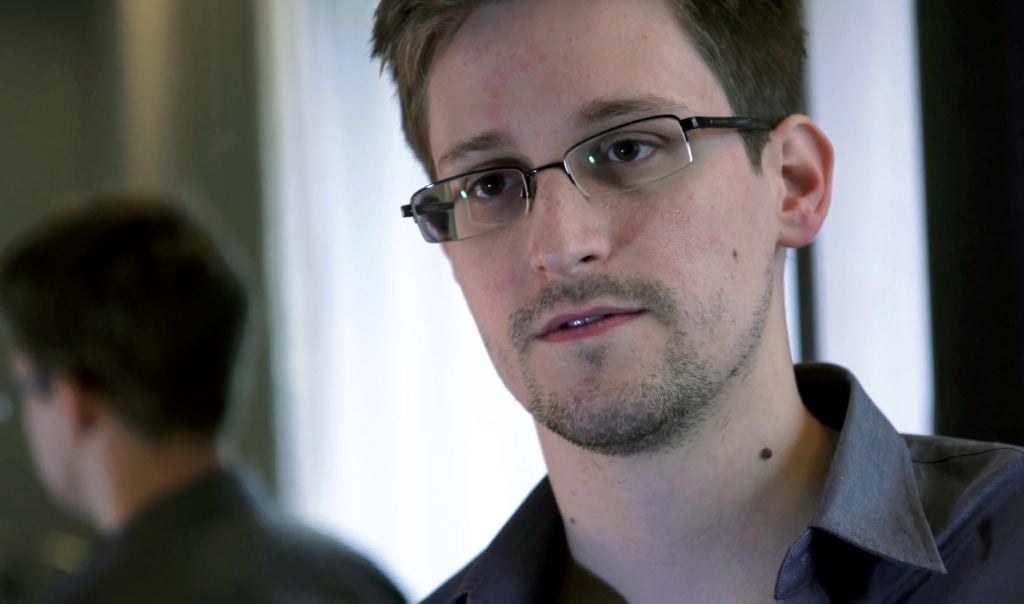
AP — The former National Security Agency contractor who disclosed a highly classified surveillance program has had his US passport revoked.
A US official on Sunday said Edward Snowden’s passport was annulled before he left Hong Kong for Russia. Snowden’s travel plans could be complicated — but not thwarted — by a lack of passport. The US official said that if a senior official in a country or airline ordered it, a country could overlook the withdrawn passport.
The former contractor is said to be in Moscow and his allies at anti-secrecy WikiLeaks say Snowden is bound for Ecuador. The foreign minister there says he has requested asylum.
The US official would only discuss the passport on the condition of anonymity because the official was not authorized to discuss the matter.
Snowden had been in hiding in Hong Kong for several weeks since he revealed information on the highly classified spy programs. The WikiLeaks anti-secrecy group said it was working with him.
Snowden has been allowed to leave for a “third country” because a US extradition request did not fully comply with Hong Kong law, the territory’s government said Sunday.
An Aeroflot flight from Hong Kong believed to be carrying Edward Snowden landed in Moscow. Russia’s state ITAR-Tass news agency cited an unnamed Aeroflot airline official as saying Snowden was on Flight SU213, which landed on Sunday afternoon in Moscow.
The White House had no immediate comment about the departure, which came a day after the United States made a formal request for his extradition and gave a pointed warning to Hong Kong against delaying the process of returning him to face trial in the U.S.
The Department of Justice said only that it would “continue to discuss this matter with Hong Kong and pursue relevant law enforcement cooperation with other countries where Mr. Snowden may be attempting to travel.”
The Hong Kong government said in a statement that Snowden left “on his own accord for a third country through a lawful and normal channel.”
It acknowledged the US extradition request, but said US documentation did not “fully comply with the legal requirements under Hong Kong law.” It said additional information was requested from Washington, but since the Hong Kong government “has yet to have sufficient information to process the request for provisional warrant of arrest, there is no legal basis to restrict Mr. Snowden from leaving Hong Kong.”
The statement said Hong Kong had informed the US of Snowden’s departure. It added that it wanted more information about alleged hacking of computer systems in Hong Kong by US government agencies which Snowden had revealed.
The signal that Hong Kong had let Snowden go on a technicality appears to be a pragmatic decision aimed at avoiding a drawn out extradition battle. The move swiftly eliminates a geopolitical headache that could have left it facing pressure from both Washington and Beijing.
Hong Kong, a former British colony, has a high degree of autonomy and is granted rights and freedoms not seen on mainland China, but under the city’s mini constitution Beijing is allowed to intervene in matters involving defense and diplomatic affairs.
Hong Kong has an extradition treaty with the US, but the document has some exceptions, including for crimes deemed political.
Russian officials have given no indication that they have any interest in detaining Snowden or any grounds to do so. Foreign Minister Sergey Lavrov has said that Russia would be willing to consider granting asylum if Snowden were to make such a request.
Russia and the United States have no extradition treaty that would oblige Russia to hand over a US citizen at Washington’s request.
WikiLeaks said it was providing legal help to Snowden at his request and that he was being escorted by diplomats and legal advisors from the group. Its founder, Julian Assange, who has spent a year inside the Ecuadorean Embassy in London to avoid extradition to Sweden to face questioning about sex crime allegations, told the Sydney Morning Herald that his organization is in a position to help because it has expertise in international asylum and extradition law.
The Obama administration on Saturday warned Hong Kong against delaying Snowden’s extradition, with White House national security adviser Tom Donilon saying in an interview with CBS News, “Hong Kong has been a historically good partner of the United States in law enforcement matters, and we expect them to comply with the treaty in this case.”
Snowden’s departure came as the South China Morning Post released new allegations from Snowden that US hacking targets in China included the nation’s cellphone companies and two universities hosting extensive Internet traffic hubs.
He told the newspaper that “the NSA does all kinds of things like hack Chinese cellphone companies to steal all of your SMS data.” It added that Snowden said he had documents to support the hacking allegations, but the report did not identify the documents. It said he spoke to the newspaper in a June 12 interview.
With a population of more than 1.3 billion, China has massive cellphone companies. China Mobile is the world’s largest mobile network carrier with 735 million subscribers, followed by China Unicom with 258 million users and China Telecom with 172 million users.
Snowden said Tsinghua University in Beijing and Chinese University in Hong Kong, home of some of the country’s major Internet traffic hubs, were targets of extensive hacking by US spies this year. He said the NSA was focusing on so-called “network backbones” in China, through which enormous amounts of Internet data passes.
The Chinese government has not commented on the extradition request and Snowden’s departure, but its state-run media have used Snowden’s allegations to poke back at Washington after the U.S. had spent the past several months pressuring China on its international spying operations.
A commentary published Sunday by the official Xinhua News Agency said Snowden’s disclosures of U.S. spying activities in China have “put Washington in a really awkward situation.”
“Washington should come clean about its record first. It owes … an explanation to China and other countries it has allegedly spied on,” it said. “It has to share with the world the range, extent and intent of its clandestine hacking programs.”
Copyright 2013 The Associated Press.






The Times of Israel Community.